


TCMT Carbide Inserts For Steel And Cast Iron
The TCMT Insert is widely applied in automobile, aerospace, 3C and other industries.
Grade: Various
Applications: Turning
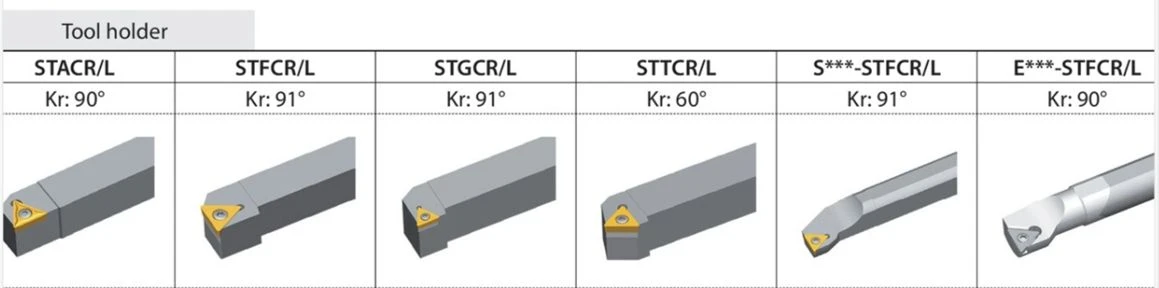
Corresponding Tools: STACR/L, STFCR/L, STGCR/L, STTCR/L, S***-STFC/L, E***-STFCR/L
Applicable fields: Automobile, Aerospace, etc
Product Introduction:
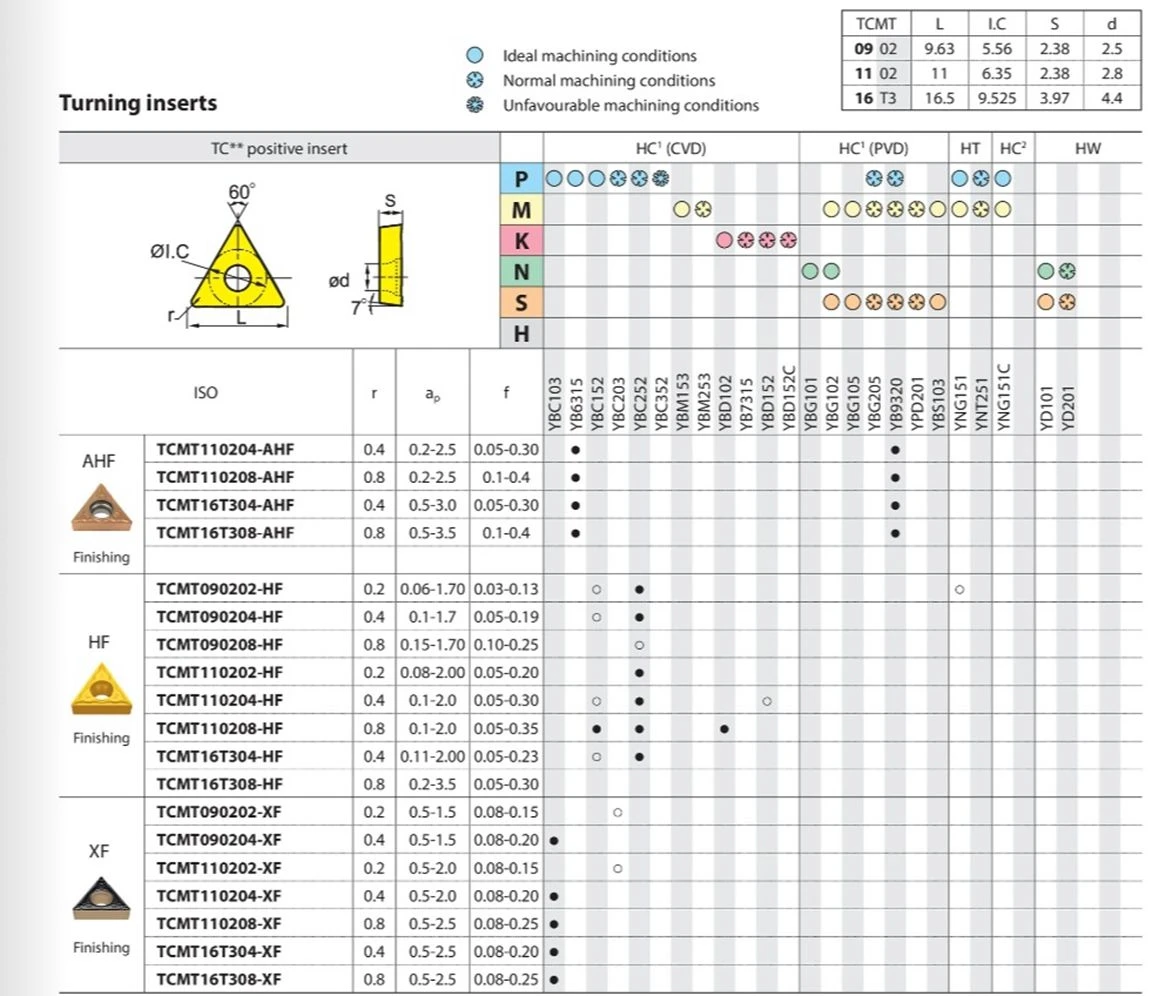
These triangular TCMT turning inserts are manufactured from grade 1105 carbide with a TiAlN coating. Part of the CoroTurn® 107 range of inserts, the products provide excellent chip control and unobstructed chip flow when working. Available in a range of specifications and sizes, the turning inserts are suited for use on steels and heat resistant super alloys.
Features and Benefits
● TiAlN coated for durability and tool longevity
● Available in an array of sizes and specifications to suit your exact needs
● Manufactured from grade 1105 carbide for maximum resilience
● Part of the CoroTurn® 107 range of inserts that offers superior chip control and unobstructed chip flow
Typical Applications
● Suited for use on steels including stainless steels as well as heat resistant super alloys
Product Specifications:
The Application of TCMT Carbide Inserts for Stainless Steel
TCMT (ISO code for the insert shape) carbide inserts are widely used in machining applications, and they can be specifically applied to stainless steel, among other materials. Here are some key considerations and recommendations for using TCMT carbide inserts when machining stainless steel:
1. Insert Grade:
● Select a carbide grade that is designed for machining stainless steel. Grades with a high level of hardness and wear resistance are typically preferred. Coated carbide inserts, such as those with TiN (Titanium Nitride) or TiAlN (Titanium Aluminum Nitride) coatings, can enhance tool life and performance.
2. Cutting Speeds and Feeds:
● Stainless steel is known for its work-hardening properties, so cutting speeds should be controlled to avoid excessive heat generation. Start with conservative cutting speeds and feeds, and adjust based on the specific alloy of stainless steel being machined.
3. Coolant and Lubrication:
● Use adequate coolant or lubrication to dissipate heat and improve chip evacuation. This is particularly important in stainless steel machining to prevent work hardening and extend tool life.
4. Chip Control:
● Choose an appropriate chipbreaker geometry for the TCMT insert. Efficient chip evacuation helps prevent chip recutting, which can lead to increased tool wear.
5. Insert Geometry:
● TCMT inserts are available with different chipbreaker geometries, such as F (finishing), M (medium), and C (coarse). The choice of geometry depends on the machining operation (roughing, finishing, etc.) and the specific requirements of the stainless steel application.
6. Avoiding Built-Up Edge (BUE):
● Stainless steel has a tendency to create built-up edge on cutting tools. Proper tool geometry, sharp cutting edges, and the right cutting parameters can help minimize BUE.
7. Tool Rigidity:
● Ensure that the machining setup is rigid and stable to minimize vibrations. Vibrations can lead to poor surface finish, tool wear, and reduced tool life.
8. Post-Machining Operations:
● Consider post-machining processes such as deburring and edge preparation to improve the final product's surface finish and remove any burrs that may form during machining.
Always refer to the insert manufacturer's recommendations and guidelines for the specific TCMT insert grade you are using. Additionally, the specific alloy and condition of the stainless steel being machined will influence the optimal cutting parameters and tooling choices. Experimenting with cutting speeds, feeds, and coolant/lubrication conditions while monitoring tool wear can help optimize the machining process for stainless steel.
Hot Tags: tcmt carbide inserts for steel and cast iron, China tcmt carbide inserts for steel and cast iron manufacturers, suppliers, factory


Send Inquiry
