Types of Reamer
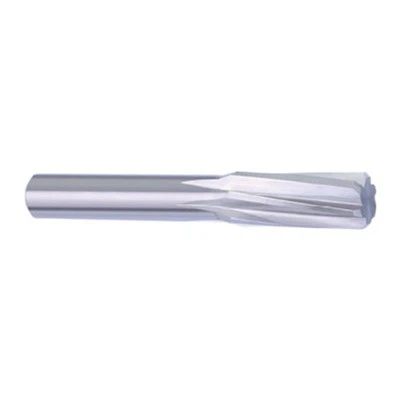
Spiral-fluted reamers: Spiral-fluted reamers are special-purpose reamers that are ideal for hard-chipping materials like stainless steel. Due to their helical flutes, the cutting forces are well-distributed over the hole reamer, allowing them to cut through hard materials.
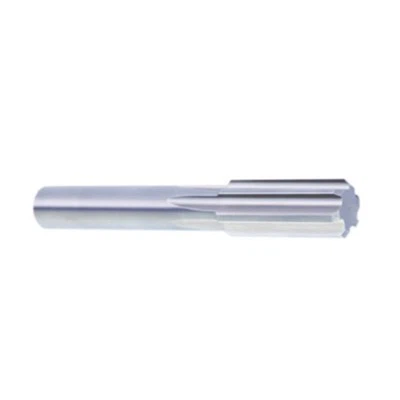
Straight-fluted reamers: Straight-fluted reamers, as the name suggests, have flutes that are parallel to the central axis of the reamer bit. They are suitable for materials that do not produce a lot of chips, such as brass and cast iron.
Taper pin reamers: Taper pin reamers feature a tapered body. This means that the diameter of the metal reamer decreases as one moves from the root to the tip along the central axis. This unconventional shape is perfect when the hole accommodates components like taper pins.
Shell reamers: Shell reamers come as a sleeve with cutting flutes on the outside. The sleeve, or ‘shell’, is fitted onto a reaming arbor to perform the reaming operation. A usual shell reamer has multiple flutes spanning the entire length of its body and that can be straight or spiral, depending upon the application.
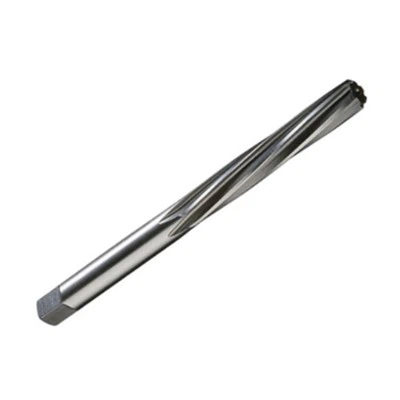
Hand reamers: A hand reamer is designed for manual reaming, as opposed to a machine reamer, which is used on machine tools. Its design usually features helical flutes to facilitate chip evacuation and distribute cutting forces.
Floating reamers: Floating reaming is more of a separate reaming setup than a reamer bit. So, these floating holders are compatible with all reamer types. The special thing about it is the floating reamer holder, which isolates the machine tool drive from the tool through an independent bearing setup.
Other reamer types: The list of types of reamer above includes the most common reaming tools one can find inside a machine shop. On top of these, there are multiple other reamer types for specialized reaming operations.