Hard alloy applications
Oct 13, 2023
In 1923, Schlester from Germany added 10% to 20% cobalt as a binder to tungsten carbide powder, inventing a new alloy of tungsten carbide and cobalt, with a hardness second only to diamond. This was the first artificial hard alloy in the world. When cutting steel with a tool made of this alloy, the blade will wear out quickly and even crack. In 1929, Schwarzkov of the United States added a certain amount of compound carbides of tungsten carbide and titanium carbide to the original composition, improving the performance of the cutting tool in cutting steel. This is another achievement in the history of hard alloy development.
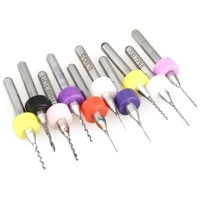
Hard alloy can also be used to make rock drilling tools, mining tools, drilling tools, measuring tools, wear-resistant parts, metal grinding tools, cylinder liners, precision bearings, nozzles, hardware molds (such as wire drawing molds, bolt molds, nut molds, and various fastener molds, and the excellent performance of hard alloy gradually replaces the previous steel molds).
In the past twenty years, coated hard alloys have also been introduced. In 1969, Sweden successfully developed a titanium carbide coated tool, which is made of tungsten titanium cobalt hard alloy or tungsten cobalt hard alloy as the substrate. The thickness of the titanium carbide coating on the surface is only a few micrometers, but compared with alloy tools of the same brand, the service life is extended by three times and the cutting speed is increased by 25% to 50%. In the 1970s, the fourth generation of coating tools emerged, which can be used to cut materials that are difficult to machine.
How is hard alloy sintered?
Hard alloy is a metal material made by powder metallurgy of carbides and adhesive metals of one or more refractory metals.