Types And Uses Of CNC Milling Cutters
Oct 24, 2023
Generally divided into:
1. Flat end milling cutter for rough milling, removing a large amount of blanks, and fine milling of small horizontal planes or contours;
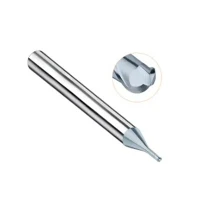
2. Ball end milling cutter for semi precision milling and precision milling of curved surfaces; A small knife can finely mill small chamfers on steep surfaces/straight walls.
3. The flat end milling cutter has chamfers, which can be used for rough milling to remove a large amount of blanks, and can also be used for fine milling of small chamfers on flat surfaces (relative to steep surfaces).
4. Formed milling cutters, including chamfer cutters, T-shaped milling cutters or drum cutters, toothed cutters, and internal R-cutters.
5. Chamfer cutter, which has the same shape as the chamfer and is divided into milling cutters for circular chamfering and oblique chamfering.
6. T-shaped cutter, capable of milling T-shaped grooves;
7. Tooth cutter, milling various tooth shapes, such as gears.
8. Coarse leather cutter, designed for cutting aluminum copper alloy, can be quickly processed
Milling method
There are two ways to adjust the feed direction relative to the workpiece and the rotation direction of the milling cutter:
The first type is forward milling, where the rotation direction of the milling cutter is the same as the feed direction of the cutting. At the beginning of the cutting, the milling cutter bites the workpiece and cuts off the final chips.
The second type is reverse milling, where the rotation direction of the milling cutter is opposite to the feed direction of the cutting. Before starting the cutting, the milling cutter must slide a section on the workpiece, starting with a cutting thickness of zero, and reaching the maximum cutting thickness at the end of the cutting.
When using a three sided milling cutter, some end mills, or face mills, the cutting force has different directions. During surface milling, the milling cutter is exactly on the outer side of the workpiece, and special attention should be paid to the direction of cutting force. During forward milling, the cutting force presses the workpiece towards the workbench, while during reverse milling, the cutting force forces the workpiece away from the workbench.
Due to the best cutting effect of forward milling, forward milling is usually preferred. Reverse milling is only considered when the machine tool has thread clearance issues or problems that cannot be solved by forward milling.
In an ideal situation, the diameter of the milling cutter should be larger than the width of the workpiece, and the axis of the milling cutter should always be slightly away from the centerline of the workpiece. When the tool is placed facing the cutting center, burrs are easily generated. When the cutting edge enters and exits the cutting process, the direction of the radial cutting force will constantly change, and the machine tool spindle may vibrate and be damaged. The blade may shatter and the machining surface will be very rough. The milling cutter will deviate slightly from the center, and the direction of the cutting force will no longer fluctuate - the milling cutter will obtain a preload. We can compare center milling to driving in the center of the road.
Every time the milling cutter blade enters the cutting process, the cutting edge must withstand an impact load, which depends on the cross-sectional area of the chip, workpiece material, and cutting type. When cutting in and out, whether the cutting edge and workpiece can engage correctly is an important direction.
When the axis of the milling cutter is completely located outside the width of the workpiece, the impact force during cutting is borne by the outermost tip of the blade, which means that the initial impact load is borne by the most sensitive part of the tool. The milling cutter also leaves the workpiece with the tip, which means that from the beginning of cutting to leaving, the cutting force continues to act on the outermost tip until the impact force is unloaded. When the centerline of the milling cutter is exactly on the edge line of the workpiece, the blade disengages from cutting when the chip thickness reaches its maximum, and the impact load reaches its maximum when cutting in and out. When the axis line of the milling cutter is within the width of the workpiece, the initial impact load during the cutting process moves along the cutting edge from the farthest part from the most sensitive tool tip